Showing posts with label your. Show all posts
Showing posts with label your. Show all posts
Thursday, October 23, 2014
How to Make your own Breadboard
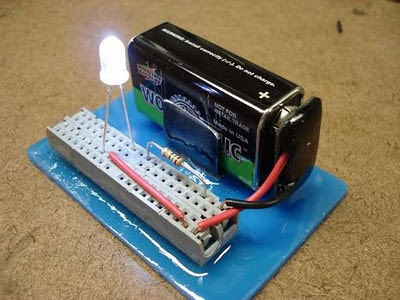
Often we do not have the opportunity or the money to keep our hobby, sometimes we lack tools, but always there is a knack for everything, is what we see here in this article was originally published at indestructible. He teaches you how to make your own breadboard using scrap old computers, in fact it uses sockets IDE cable. The breadboard makes life easier for those who like to create electronic circuits, and can only plug components without using solder.


Friday, September 5, 2014
How to Dial in Your Cars Audio System
Level setting, done by ear, is more art than science. It can be done using an oscilloscope but since few people have one of those laying around well cover doing it by ear. Basically you want to start with the first component in the chain (the head unit) and work your way to the last component (the amplifier).
1. Start by turning all of the input level adjustment knobs (gain controls) on your components fully counter-clockwise (to their minimum setting). Set the tone controls (bass, treble, loudness) on your head unit to no boost (bass and treble level = 0 and loudness is off). If you have more than one RCA pair you will want to set each gain adjustment separately. Make sure your fader and balance controls are set to the channel you want to adjust first. This can be an individual channel if you have individual gain adjustments or a pair of channels if you have one gain for two channels.
2. Next set all of your equalizers settings (if you have an equalizer) to the center (detent) position so they produce no boost or cut. What we want is as pure a signal as possible.
3. Put in some good quality source material, preferably a CD with strong output and a clean recording. Hard rock would be a bad choice here. Try something cleaner, maybe acoustic, that youre familiar with.
4. Turn the decks volume up slowly until you begin to hear distortion. When you hear it, stop and back off slightly until you no longer hear it. If you dont hear distortion, even when the volume is all of the way up then you have a quality head unit. Thats what were looking for.
5. Now with your head unit at maximum undistorted volume move on to the next component. Adjust its input gain until you begin to hear distortion. Back off slightly.
6. Continue this process until you have all of the components in the chain at their maximum undistorted level.
7. When you reach the amplifiers you may need to wear earplugs to adjust them to their maximum level. As before, turn up the gain until you hear audible distortion. This should be audible even with earplugs in. But honestly, if you have to wear earplugs to listen the distortion level is probably not a factor :)
Thats it. Play some music and verify that everything sounds right. Congratulations! Youve just learned to properly adjust the settings on your car audio system.
Read More..
1. Start by turning all of the input level adjustment knobs (gain controls) on your components fully counter-clockwise (to their minimum setting). Set the tone controls (bass, treble, loudness) on your head unit to no boost (bass and treble level = 0 and loudness is off). If you have more than one RCA pair you will want to set each gain adjustment separately. Make sure your fader and balance controls are set to the channel you want to adjust first. This can be an individual channel if you have individual gain adjustments or a pair of channels if you have one gain for two channels.
2. Next set all of your equalizers settings (if you have an equalizer) to the center (detent) position so they produce no boost or cut. What we want is as pure a signal as possible.
3. Put in some good quality source material, preferably a CD with strong output and a clean recording. Hard rock would be a bad choice here. Try something cleaner, maybe acoustic, that youre familiar with.
4. Turn the decks volume up slowly until you begin to hear distortion. When you hear it, stop and back off slightly until you no longer hear it. If you dont hear distortion, even when the volume is all of the way up then you have a quality head unit. Thats what were looking for.
5. Now with your head unit at maximum undistorted volume move on to the next component. Adjust its input gain until you begin to hear distortion. Back off slightly.
6. Continue this process until you have all of the components in the chain at their maximum undistorted level.
7. When you reach the amplifiers you may need to wear earplugs to adjust them to their maximum level. As before, turn up the gain until you hear audible distortion. This should be audible even with earplugs in. But honestly, if you have to wear earplugs to listen the distortion level is probably not a factor :)
Thats it. Play some music and verify that everything sounds right. Congratulations! Youve just learned to properly adjust the settings on your car audio system.
Sunday, August 31, 2014
Find the best stereo for your car
You can find out how to choose the best stereo for your car by reading this informative article!
The first thing to do is to check with your family members and friends to see what kind of stereo equipment they have in their vehicles. Referrals are sometimes the best way to find a reliable brand. The next step is to start shopping around in electronic stores to see what brands there are, what kinds of stereos are available for purchase, and what options are available. Be sure to check on what kind of a warranty that each stereo carries. Decide at this point what you want in a stereo and what you do not want. Decide what you would like to have, but what you can live without. For example, do you really need twenty radio preset buttons or can you live with only six? Beware of the extras that you may not need. If you are not going to use them, then do not buy a system with them on it. The more the gadgets, the higher the cost of the stereo, of course. Decide on how much money you can possibly spend. Talk to sales clerks and ask their opinions about the different kinds of stereos. Ask what kind they have in their own vehicles. Ask at each store whether-or-not they are authorized dealers of the products that they recommend. If your stereo needs repaired, can you take it back there and have it fixed?
Ask each sales clerk if they can demonstrate each of the models they carry? Obviously you will want to hear the differences in the stereos before you finally choose one and buy it. Find out if they will install the stereo too. Ask them the exact steps that they would take in order to accomplish the task. Find out if they have any pictures of their work. This especially pertains to the installation of the stereos speakers ans subwoofers. If you purchase a stereo and speakers that are the same size as what you currently have, then the new equipment can simply be put into the same spaces that your current equipment is in. But, if you purchase bigger speakers that will need more space to accomodate them, then these units need to be enclosed first, and then covered with carpet to match your car, truck, or van.
Stereos for your vehicle usually start out with the basic AM/FM radio unit. That is the most basic stereo you can get. Then, there are models that also have cassette players and CD players, etc. Name brand stereos and speakers are probably the better route to take when choosing. You will undoubtedly get a better sound and performance from a name brand that you can trust. Stay away from cheap models that probably sound tinny, muffled, or otherwise unnatural. The cheaper brands tend not to hold up as well as the name brands too.
Finally, the sales people will probably try to talk to you about woofers and tweeters and frequencies, etc. To put it in plain English, the woofer handles the bass frequencies and the tweeter handles the treble frequencies. If you are really interested in this, that is fine. But, if you are not, then that is all you need to know. If you dont understand the lingo of the stereo world, dont let them baffle you with foreign sounding words, technical terms, and other information that you really dont need to know.
Read More..
The first thing to do is to check with your family members and friends to see what kind of stereo equipment they have in their vehicles. Referrals are sometimes the best way to find a reliable brand. The next step is to start shopping around in electronic stores to see what brands there are, what kinds of stereos are available for purchase, and what options are available. Be sure to check on what kind of a warranty that each stereo carries. Decide at this point what you want in a stereo and what you do not want. Decide what you would like to have, but what you can live without. For example, do you really need twenty radio preset buttons or can you live with only six? Beware of the extras that you may not need. If you are not going to use them, then do not buy a system with them on it. The more the gadgets, the higher the cost of the stereo, of course. Decide on how much money you can possibly spend. Talk to sales clerks and ask their opinions about the different kinds of stereos. Ask what kind they have in their own vehicles. Ask at each store whether-or-not they are authorized dealers of the products that they recommend. If your stereo needs repaired, can you take it back there and have it fixed?
Ask each sales clerk if they can demonstrate each of the models they carry? Obviously you will want to hear the differences in the stereos before you finally choose one and buy it. Find out if they will install the stereo too. Ask them the exact steps that they would take in order to accomplish the task. Find out if they have any pictures of their work. This especially pertains to the installation of the stereos speakers ans subwoofers. If you purchase a stereo and speakers that are the same size as what you currently have, then the new equipment can simply be put into the same spaces that your current equipment is in. But, if you purchase bigger speakers that will need more space to accomodate them, then these units need to be enclosed first, and then covered with carpet to match your car, truck, or van.
Stereos for your vehicle usually start out with the basic AM/FM radio unit. That is the most basic stereo you can get. Then, there are models that also have cassette players and CD players, etc. Name brand stereos and speakers are probably the better route to take when choosing. You will undoubtedly get a better sound and performance from a name brand that you can trust. Stay away from cheap models that probably sound tinny, muffled, or otherwise unnatural. The cheaper brands tend not to hold up as well as the name brands too.
Finally, the sales people will probably try to talk to you about woofers and tweeters and frequencies, etc. To put it in plain English, the woofer handles the bass frequencies and the tweeter handles the treble frequencies. If you are really interested in this, that is fine. But, if you are not, then that is all you need to know. If you dont understand the lingo of the stereo world, dont let them baffle you with foreign sounding words, technical terms, and other information that you really dont need to know.
Subscribe to:
Posts (Atom)
